Do you want your business to show up when someone searches nearby? Then you need the best local SEO strategies to rank on Google Maps. This guide breaks everything down in plain English. No coding skills required. No confusing jargon. Just simple, actionable steps you can start today.
Local SEO is not complicated once you understand the basics. However, most beginners get overwhelmed by technical advice. Therefore, this post focuses on practical steps anyone can follow, whether you run a bakery, a blog, or a brand-new service business.
What Is Local SEO, and Why Does It Matter?
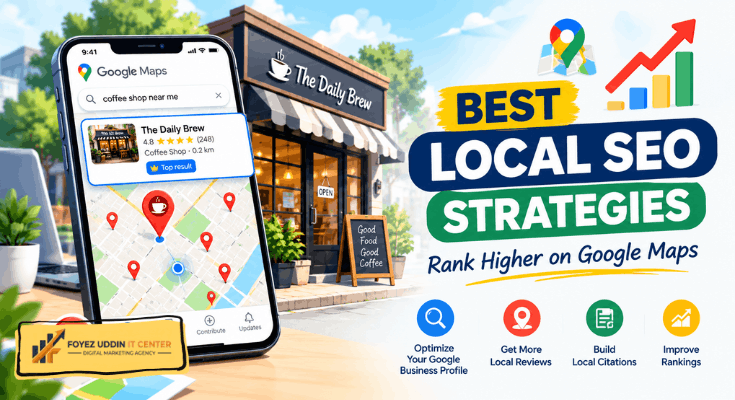
Local SEO is the process of optimizing your online presence so nearby customers can find you. It helps your business appear in the “Map Pack,” which is that box of three business listings that shows up above regular search results.
For example, when someone searches “coffee shop near me,” Google shows a map with pinned locations. If your business isn’t optimized, you simply won’t appear there. Therefore, local SEO directly affects how much foot traffic and calls you receive.
Small business owners often assume SEO is only for big companies. That’s false. In fact, local SEO levels the playing field. A well-optimized small shop can outrank a large chain nearby.
This is exactly why learning the best local SEO strategies matters, regardless of your budget or business size.
Step 1: Claim and Optimize Your Google Business Profile
Your Google Business Profile (GBP) is the single most important tool for Google Maps ranking. It’s free. However, many business owners never fully set it up.
Here’s what to do:
- Claim your listing at google.com/business if you haven’t already.
- Verify your business through mail, phone, or email confirmation.
- Fill out every single field, including hours, phone number, website, and category.
- Choose the most accurate primary category for your business type.
- Add high-quality photos of your storefront, products, and team.
- Write a keyword-rich business description that naturally includes your services.
An incomplete profile signals low trust to Google. Therefore, completeness directly impacts your visibility in local search results.
Step 2: Get Your NAP Consistency Right
NAP stands for Name, Address, and Phone Number. This information must match exactly across every website and directory where your business appears.
For instance, if your Google listing says “St.” but your website says “Street,” that small mismatch can confuse Google’s algorithm. As a result, your rankings may suffer.
Quick NAP checklist:
- Use the exact same business name everywhere.
- Format your address identically on every platform.
- List one primary phone number consistently.
- Update old directories that still show outdated information.
Consistency builds trust. Trust builds rankings.
Step 3: Collect and Respond to Customer Reviews
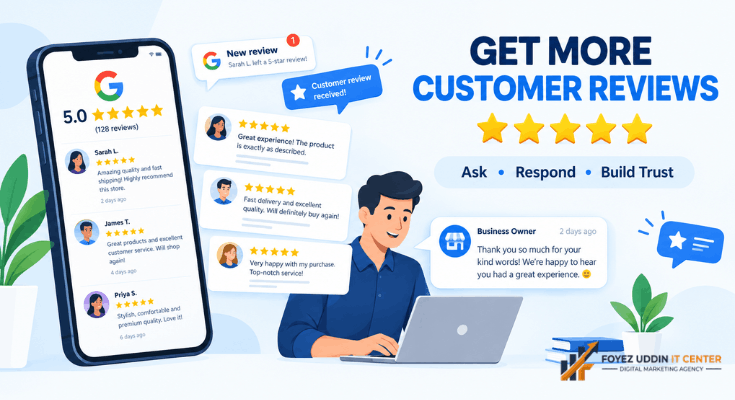
Reviews are a massive ranking factor. However, they also build real trust with potential customers. Google favors businesses with frequent, positive, and recent reviews.
How to get more reviews:
- Ask happy customers directly, in person, or via email.
- Send a follow-up text with a direct review link.
- Make it easy with a QR code at checkout.
- Never buy fake reviews. This can get your listing suspended.
Always respond to reviews, both positive and negative. A thoughtful reply shows Google and future customers that you’re active and engaged. For example, thanking a reviewer by name and mentioning your service builds relevance signals naturally.
Step 4: Build Local Citations and Directory Listings
A citation is any online mention of your business name, address, and phone number. These appear on directories like Yelp, Yellow Pages, and industry-specific sites. Building citations is one of the best local SEO strategies for boosting trust fast.
Building citations helps Google verify that your business is legitimate and well-established. Therefore, the more consistent citations you have, the stronger your local trust signals become.
Where to build citations:
- General directories: Yelp, Bing Places, Apple Maps
- Industry-specific directories relevant to your niche
- Local chamber of commerce websites
- Community and neighborhood blogs
Step 5: Optimize Your Website for Local Keywords
Even without coding knowledge, you can optimize your website using simple website builders like Wix, Squarespace, or WordPress with a page builder plugin. This step is one of the best local SEO strategies for turning site visitors into paying customers.
On-page local SEO tips:
- Include your city and service name in page titles.
- Add a dedicated contact page with your embedded Google Map.
- Mention your service area naturally throughout your content.
- Use header tags (H1, H2) to organize content clearly.
- Ensure your site loads quickly and works well on mobile.
For instance, instead of a generic title like “Home,” use “Affordable Plumbing Services in Austin, TX.” This small change gives Google clear local context.
Step 6: Create Location-Specific Content
Publishing blog posts about your local area builds authority and relevance. This is one of the best local SEO strategies for long-term growth.
Content ideas include:
- “Top 5 Things to Do Near [Your Neighborhood]”
- Guides highlighting local events or seasonal promotions
- Customer success stories tied to your city
- Partnerships or features with other local businesses
This type of content signals to Google that your business is genuinely rooted in that community. As a result, your local relevance score improves over time.
Step 7: Build Local Backlinks
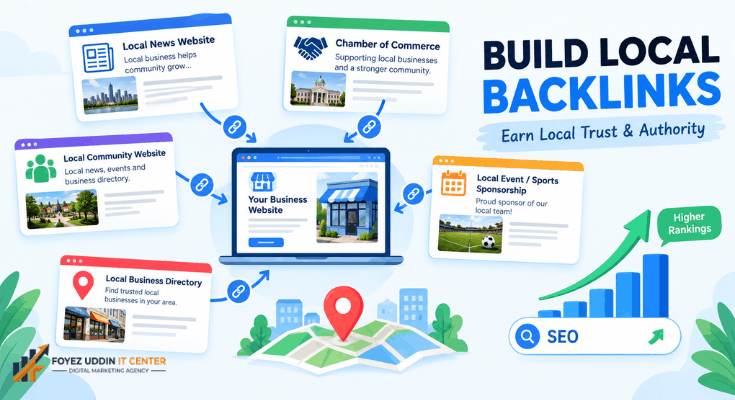
A backlink is a link from another website pointing to yours. Local backlinks, in particular, strengthen your geographic relevance in Google’s eyes.
Easy ways to earn local backlinks:
- Sponsor a local event or sports team.
- Get featured in local news articles.
- Partner with complementary businesses for cross-promotion.
- Join your local chamber of commerce for a directory link.
These links act like votes of confidence. Therefore, more quality local backlinks generally mean stronger rankings.
Step 8: Use Google Posts to Stay Active
Google Business Profile allows you to publish short updates called “Posts,” similar to social media. These appear directly on your listing.
Use posts to share:
- Special offers or discounts
- New product announcements
- Upcoming events
- Seasonal updates
Regular activity tells Google your business is active and trustworthy. Consequently, this can give you a small but meaningful ranking boost.
Step 9: Monitor Your Performance
You can’t improve what you don’t measure. Fortunately, Google Business Profile provides free insights showing how customers find you.
Track these metrics:
- Number of map views and searches
- Website clicks and phone calls generated
- Direction requests to your location
- Most common search terms used to find you
Reviewing this data monthly helps you understand which strategies from this guide are working best for your specific business.
Common Local SEO Mistakes to Avoid
Even well-meaning business owners make mistakes that hurt their rankings. Knowing what to avoid is just as important as knowing the best local SEO strategies to follow. Avoid these common pitfalls:
- Ignoring your Google Business Profile after the initial setup.
- Using inconsistent business information across platforms.
- Buying fake reviews or ignoring negative ones.
- Forgetting mobile optimization, since most local searches happen on phones.
- Stuffing keywords unnaturally into your website content.
Avoiding these errors keeps your local SEO foundation strong and sustainable.
Quick Recap: Best Local SEO Strategies That Work
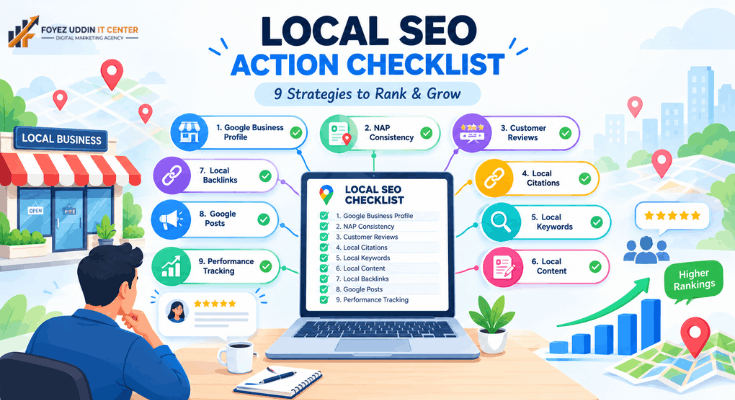
Here’s a fast summary of every tactic covered above. Use this as your action checklist.
- Claim and fully complete your Google Business Profile.
- Keep your NAP (Name, Address, Phone) consistent everywhere.
- Collect and respond to customer reviews regularly.
- Build local citations on trusted directories.
- Optimize your website content with local keywords.
- Publish location-specific blog content often.
- Earn local backlinks from community sources.
- Post updates using Google Posts to stay active.
- Track your results with Google Business Profile insights.
Following these best local SEO strategies consistently is what separates businesses that rank from those that don’t.
Final Thoughts
Ranking on Google Maps doesn’t require expensive tools or technical expertise. Instead, it requires consistency, patience, and following proven steps.
Start by claiming your Google Business Profile today. Then, focus on reviews, citations, and locally relevant content. Over time, these best local SEO strategies will compound into real, measurable growth.
Your business deserves to be found. Now you have the roadmap to make that happen.
Frequently Asked Questions
How long does it take to rank on Google Maps?
Typically, noticeable improvements appear within 3 to 6 months. However, competitive industries may take longer.
Do I need a website to rank on Google Maps?
No, a Google Business Profile alone can rank. However, having a website significantly strengthens your overall local SEO efforts.
Is Google Business Profile really free?
Yes, creating and managing your profile costs nothing. It remains one of the most powerful free marketing tools available.
How many reviews do I need to rank well?
There’s no exact number. However, more recent, positive reviews generally correlate with stronger rankings.
Can I do local SEO without technical skills?
Absolutely. Most local SEO strategies, like claiming your profile and collecting reviews, require zero coding knowledge.
What are the best local SEO strategies for a brand-new business?
Start with your Google Business Profile, gather early reviews, and keep your NAP details consistent everywhere.