
SEO for E-commerce is the difference between a store nobody finds and one that sells around the clock. Run an online store? Then you already know the harsh truth. No traffic means no sales, no matter how good your products are.
That’s where SEO for E-commerce comes in. It’s basically how you make your store show up on Google and other search engines, so people find you without you having to pay for every single click.
This guide breaks it down in plain, easy English. No jargon. No copy-pasted fluff. Just real steps you can start using today to pull in more visitors, more traffic, and more sales.
What Is SEO for E-Commerce?
Simply put, SEO for E-commerce is the work you do to get your online store ranking higher in search results. Product pages, category pages, blog posts, images, even how fast your site loads. All of it counts.
The end goal? Get the right shoppers to land on your store when they search for what you sell.
Here’s the catch, though. E-commerce SEO isn’t quite the same as regular SEO. Online stores usually have hundreds, sometimes thousands, of product pages. A lot of them look almost identical. That confuses search engines fast if you don’t handle it right. So you need a real strategy, not guesswork.
And think about it this way: a blog wants readers. A store wants buyers. That one difference changes how you pick keywords, write content, and structure your pages.
Why Does SEO for E-Commerce Actually Matter?
A lot of store owners lean on paid ads and call it a day. Ads work, sure. But the second you stop paying, the traffic stops too.
SEO for E-commerce gives you something different: traffic that keeps coming in, for free, and keeps building over time. Here’s why that matters so much:
- Free traffic that sticks around: Once you rank, people find you without you paying per click.
- More trust: People trust organic results way more than ads.
- A better site overall: Good SEO habits also make your store faster and smoother to shop on.
- Growth that compounds: A well-optimized store keeps pulling in new buyers, even while you’re asleep.
- Cheaper customers over time: Organic traffic ends up costing way less than nonstop ad spend.
If you’re building a real business here, not a side hustle you’ll abandon in six months, this isn’t optional anymore. It’s just part of the job now.
The Questions People Actually Google About This
Let’s tackle a few of the questions real people type into Google when they’re figuring this stuff out.
How is this different from regular SEO?
Normal SEO leans on blogs and informational or service pages. SEO for E-commerce zeroes in on product pages, category structure, buyer-intent keywords, reviews, and technical headaches like duplicate content across similar products. The buying journey is shorter too; people are closer to a purchase decision.
How long before you see results?
Usually three to six months before you notice real movement. Tougher niches? Could take a year. This is a long game, not a quick fix, so patience really is part of the process.
Can a small store actually compete here?
Yes. Genuinely. Small stores win all the time with sharp keyword choices, original content, and a smoother shopping experience, even up against the big names. Go niche, go local, and stay consistent, and you’d be surprised how well you can do.
Does this work for every kind of product?
Pretty much, yeah. Results shift depending on the industry, but physical products, digital downloads, and subscriptions can all benefit from the right approach.
Keyword Research Comes First, Always
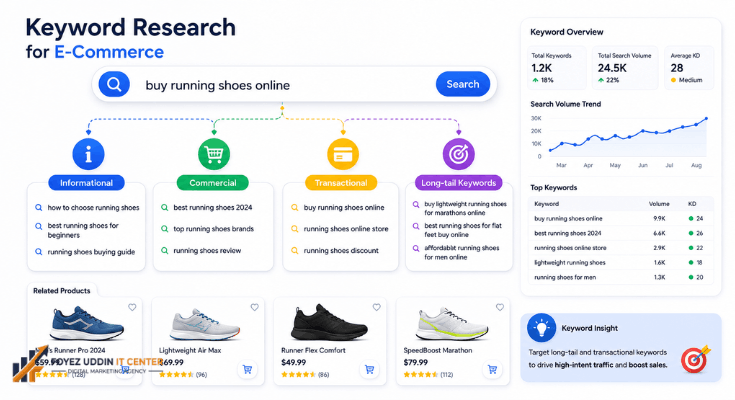
Every solid strategy starts here. You need to know exactly what your customers type into Google before they ever click “buy.”
Three keyword types worth chasing:
- Informational: “how to choose running shoes”
- Commercial: “best running shoes for men”
- Transactional: “buy running shoes online”
Grab tools like Google Keyword Planner, Ahrefs, SEMrush, or even Rank Math’s built-in keyword suggestions to dig these up. And always chase keywords with clear buying intent. Those visitors convert way more often.
Don’t sleep on long-tail keywords either. Something like “best waterproof running shoes for winter” won’t bring huge traffic, but the people searching it are usually ready to buy.
Worth checking your competitors too. See what keywords they already rank for and which product pages pull the most traffic for them. It saves you from guessing blind, and it often uncovers gaps you can jump into.
Getting Your On-Page SEO Right
This is where most of the real, hands-on work happens. Here’s how it plays out on your product and category pages.
Product Titles
Work your main keyword into the title naturally. Don’t force it, don’t stuff it. Keep it clean and readable, for search engines and for actual humans reading it.
Write Your Own Product Descriptions
Never copy the manufacturer’s description. Search engines punish duplicate content, hard. Writing original, detailed descriptions is one of the most skipped steps in SEO for E-commerce, and it makes a bigger difference than you’d think.
Keep URLs Clean
Short and readable wins. Go with “yourstore.com/mens-running-shoes” instead of some random string of numbers. Clean URLs perform better, and they’re way easier for people to remember and share.
Don’t Forget Your Images
Give product images real file names and alt text that actually describes what’s in them. Image search traffic is growing, and most stores completely ignore it. Compress your images too, so pages load fast.
Add Schema Markup
Schema tells search engines what your price, availability, and star ratings actually are. Rank Math makes this easy to set up, even if you’ve never touched code in your life.
The Technical Side You Can’t Skip
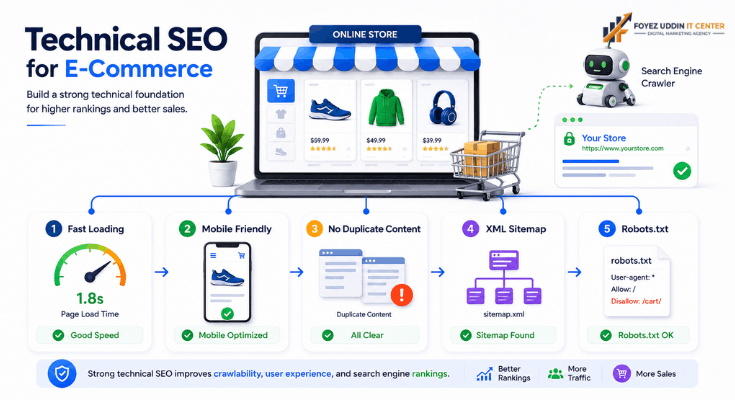
Here’s the thing: your content can be amazing and your rankings can still tank because of technical stuff nobody bothered to fix.
Site Speed
A slow site loses you both customers and rankings. Compress images, set up caching, pick decent hosting. Speed matters a lot these days, especially with most shoppers browsing on their phones.
Mobile-Friendliness
Google checks your mobile site first now; that’s just how it works. If your design isn’t responsive, you’re already behind. Most shopping happens on phones and tablets these days, so this isn’t something to put off.
Duplicate Content Issues
Filters, sorting options, and similar product variations, these all create duplicate pages without you even realizing it. Use canonical tags to point search engines to the right version. It’s an easy fix that way too many stores never bother with.
Sitemaps and Robots.txt
Keep your XML sitemap updated and submit it to Google Search Console regularly. It helps search engines find and index your pages faster, so everything else you’re doing pays off sooner.
Content That Actually Pulls Its Weight
Blogging gets underrated constantly in this whole game. Helpful articles around your products build trust and bring in people who aren’t ready to buy yet but will be soon.
Say you sell kitchen appliances. A post like “10 Easy Recipes Using an Air Fryer” brings in new visitors through Google, and some of them stick around long enough to become repeat customers.
Reviews help too, more than people realize. They add fresh, original content automatically, and they build trust, which pushes both your rankings and your conversion rate up.
Buying guides and comparisons work great as well. Something like “Blender vs Food Processor: Which One Do You Really Need?” answers a question people already have. It keeps them on your site longer, builds you up as an authority, and links naturally back to your product pages.
One more thing, don’t let old posts collect dust. Update the stats, swap in new images, and refresh your internal links every so often. Search engines like content that stays current, not stuff published once and forgotten forever.
Backlinks Still Matter
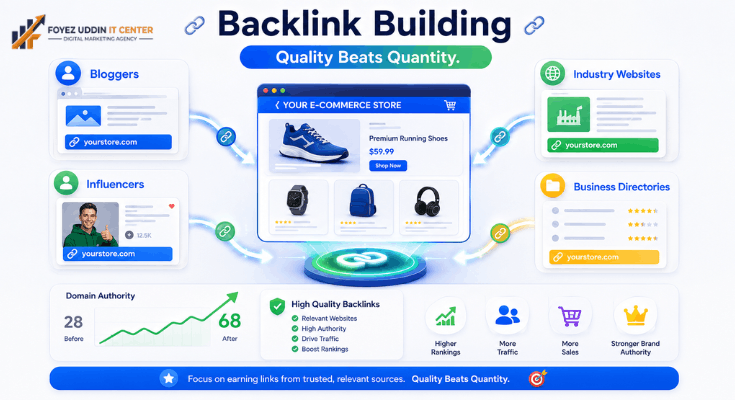
Backlinks are still one of the strongest signals search engines use. Worth chasing:
- Getting featured in “best of” roundup articles
- Teaming up with bloggers or influencers for honest reviews
- Getting listed in trusted business directories in your niche
- Writing guest posts for relevant sites in your industry
Quality beats quantity every time here. A handful of strong, relevant backlinks does more for you than hundreds of junk links ever will.
Mistakes That Keep Tripping Store Owners Up
Same mistakes, over and over. Watch out for:
- Copying manufacturer descriptions word for word
- Ignoring mobile speed and responsiveness
- Skipping alt text on product images
- Letting broken links and 404 pages pile up
- Cramming keywords in unnaturally
Playing it straight and staying consistent beats shortcuts every time. Search engines catch the tricks eventually anyway.
Wrapping This Up
SEO for E-commerce isn’t something you do once and forget about. It’s ongoing work that pays off month after month. Nail your keyword research, clean up your on-page details, fix the technical stuff, publish content people actually want, and build real backlinks. Put that together and you’ve got a foundation that keeps bringing customers in without you burning cash on ads nonstop.
Start wherever makes sense. Fix the technical issues first, then move to your content and product pages, then work on backlinks as you grow. Stay patient and stay consistent, and this becomes one of the biggest, most reliable growth engines your store has.
Frequently Asked Questions
What does SEO for E-commerce actually mean?
It’s the work of optimizing your store’s pages, images, and content so you rank higher on search engines and pull in more free traffic and sales.
Is this better than just running ads?
They both have their place, honestly. Ads get you quick traffic. This builds long-term, free traffic that keeps growing without the constant ad spend.
What’s this going to cost me?
Anywhere from free, if you’re doing it yourself, to a few hundred or a few thousand dollars a month if you bring in help.
What’s the best tool for this on WordPress?
Rank Math is a favorite. It handles keyword tracking, schema markup, sitemaps, and content analysis pretty well.
Do reviews really help my rankings?
Yeah, they do. Fresh, original content plus more trust equals better rankings and more people actually buying.
Should I just do this myself or hire someone?
Start it yourself with free tools if you’re just getting going. Once your store grows, bringing in a specialist can help you scale faster and skip the expensive mistakes.

One Comment on “SEO for E-Commerce: Complete Guide to Online Growth”